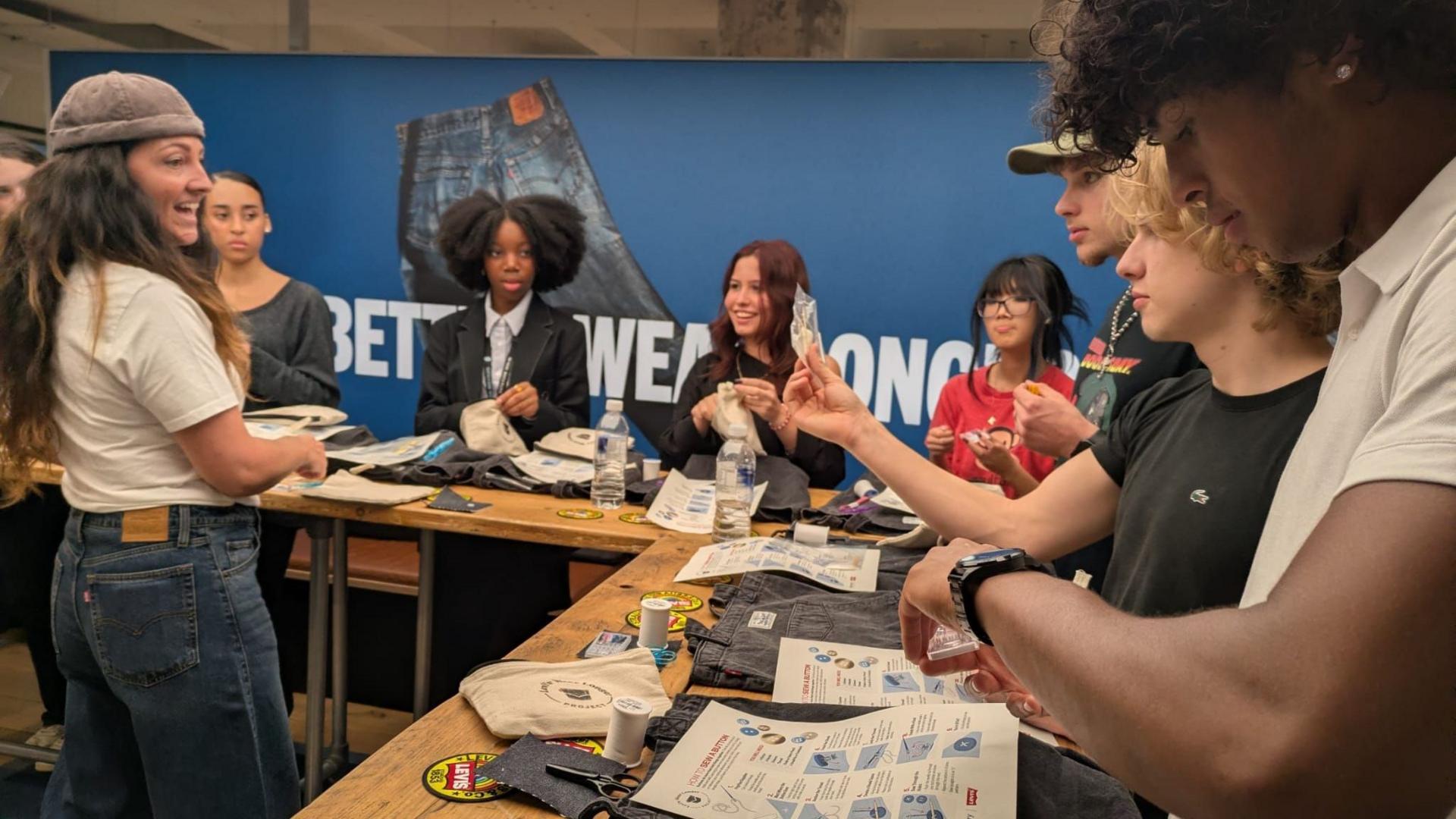
Fashion retailers from Levi's to Primark are now offering repair services and workshops, capitalizing on a growing trend of "visible mending" where customers deliberately make repairs eye-catching rather than invisible.
The trend took off about six years ago, according to Jayne Eagle, who runs repair workshops in Brighton using traditional Japanese techniques like Sashiko. She attributes its rise to a backlash against fast-fashion overproduction and the environmental damage it causes. Some customers, like Alice Brown, a 27-year-old forest ranger, use needle-felting to cover holes with cute animal designs. Others use contrasting vibrant thread and geometric patterns to celebrate repairs rather than hide them.
High Street chains are adopting the trend in different ways. Uniqlo offers decorative mending using Sashiko techniques. Primark, typically seen as ultra-fast-fashion, has joined with a team focused on garment longevity. Toast, an artisan clothing store, says about a third of customers choose eye-catching mends. Finisterre reports around a fifth of its repair customers opt for visible repairs. Levi's is rolling out a workshop programme this year focusing on traditional mending skills.
Not all younger customers embrace visible repairs. At a Levi's workshop in London, 16-year-old Bianca said people in her area associate visible holes with poverty. Theo, 19, prefers mending that makes jeans look "how I originally bought them." Paul Dillinger, Levi's head of global design innovation, suggests younger customers will embrace more creative repairs as they develop skills, arguing that visible mending demonstrates "humanity" and personal agency.