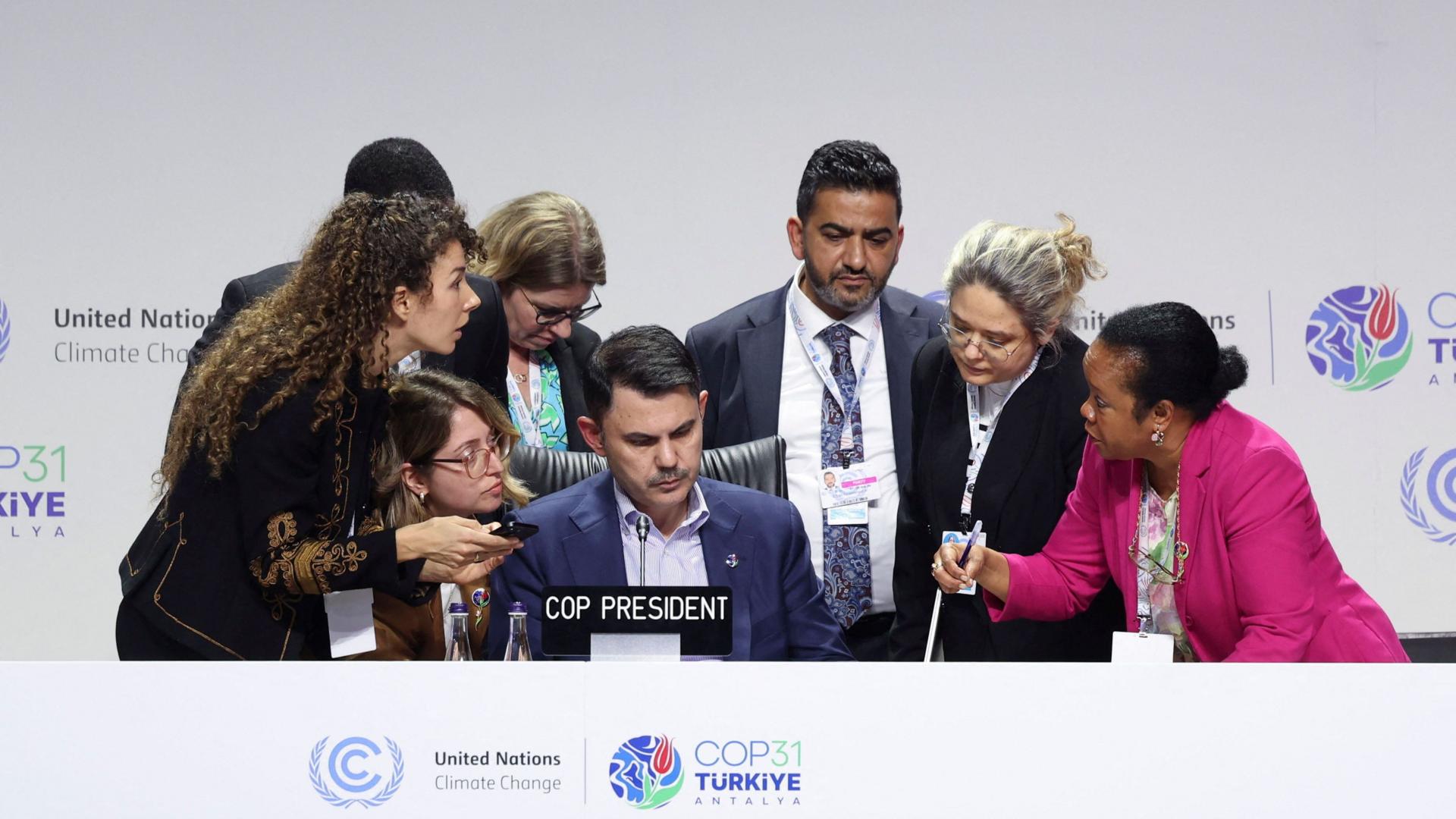
A new draft agreement released early Sunday at the UN climate summit in Antalya aims to break a deadlock that had pushed negotiations into overtime. The text acknowledges a previous commitment by countries to transition away from fossil fuels but does not explicitly mention phasing out coal, oil and gas. For the first time, it recognizes that the world is on track to miss the Paris accord goal of limiting warming to 1.5 degrees Celsius.
The omission of direct language on fossil fuels had triggered threats of walkouts from EU member states and Pacific nations, who argue the commitment is essential. Australia's Climate Change and Energy Minister Chris Bowen countered that the summit should focus on implementation and clean energy sources rather than fossil fuel language. Panama's environment minister Juan Carlos Navarro stated it was unacceptable to have a COP agreement that does not mention fossil fuels.
The draft also reduced references to carbon capture technology, which some nations said could become a loophole allowing continued oil and gas production. France's Minister of Ecological Transition Monique Barbut said the world cannot announce it is hitting 1.5 degrees of warming and continue business as usual.
A separate sticking point remains unresolved. Developing nations sought $120 billion annually by 2035 for climate adaptation, but that figure was removed from earlier draft versions. Ghana's Environment Minister Zanetor Agyeman Rawlings, chair of the African Group of negotiators, said developing countries came not to beg but to claim what is rightfully theirs.
Countries were scheduled to reconvene Sunday morning to vote on the new draft. If consensus cannot be reached as required by UN climate talks procedure, negotiations could suspend until next year. This has occurred only once since COP meetings began in 1995. COP31 President Murat Kurum told delegates early Sunday that concerns had been addressed and "we are closer than ever to agreement."