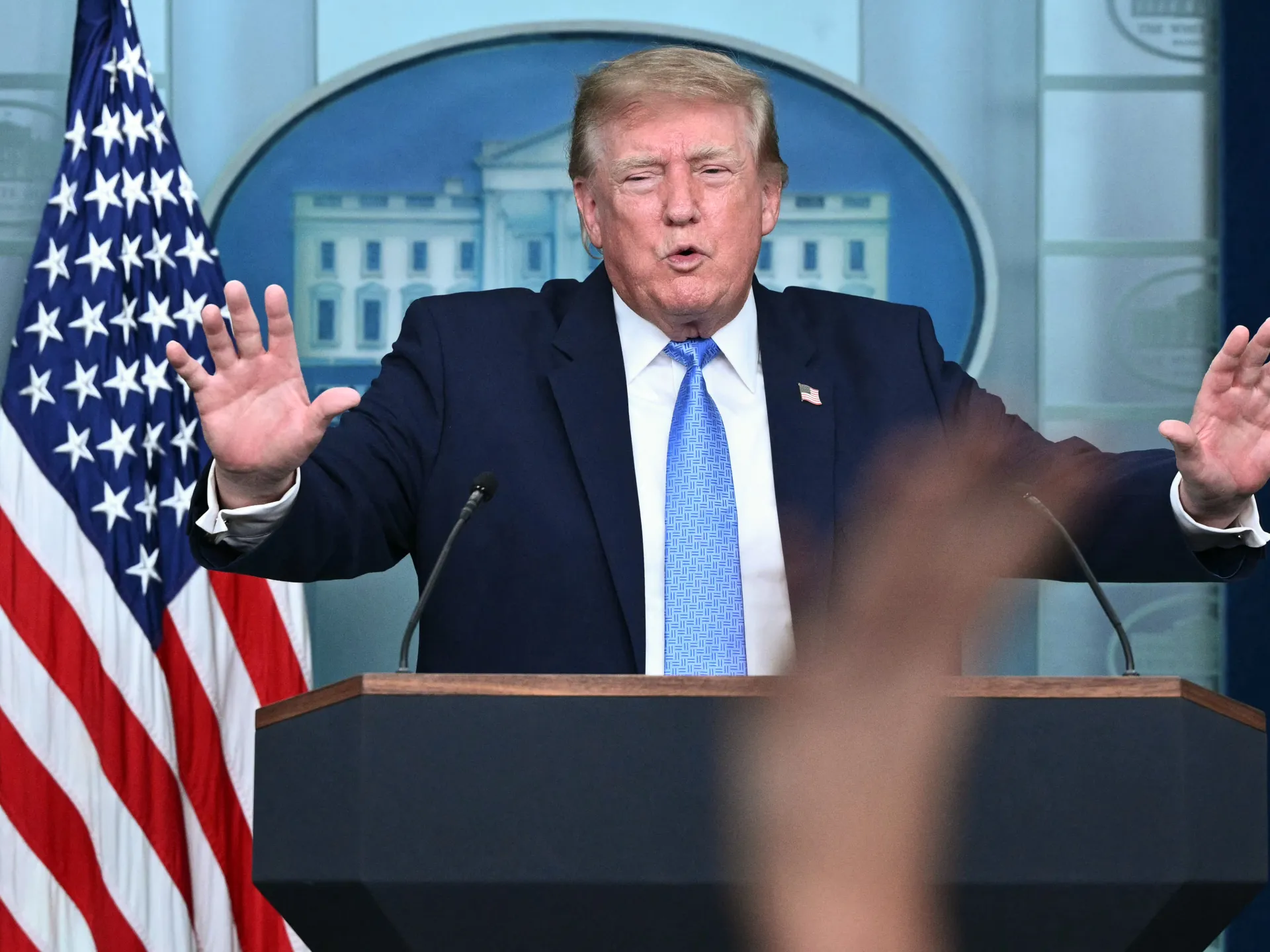
Trump said Monday that Iran is "militarily, effectively over" after meeting with Qatar's prime minister at the White House, where mediators discussed ending the war. Trump stated the US would maintain its naval blockade and newly announced Task Force Iron Gate, which targets trade by land and through the Caspian Sea, describing these measures as a "status quo" preferred by regional allies including Saudi Arabia, the UAE, Bahrain, Kuwait and Qatar.
Trump did not commit to a long-term ceasefire, telling reporters "I don't guarantee anything" and adding "if we do have to go back in, we are locked and loaded and ready to go."
Iran's Supreme National Security Council Secretary Mohsen Rezaei dismissed Trump's remarks as fake news on social media, writing "The war on Iran has already wrecked the US government." Iranian President Masoud Pezeshkian said Supreme Leader Mojtaba Khamenei had called for an end to the situation, which Pezeshkian described as "neither war nor peace." Pezeshkian stated Iran was open to negotiations but "will not surrender to force and bullying."
Iran has presented seven conditions to end the war, including lifting the US naval blockade, reparations for war damage, ending sanctions and cessation of hostilities in Lebanon and Gaza. Qatar's Prime Minister Mohammed bin Abdulrahman bin Jassim Al Thani posted on social media that he was "grateful for the positive discussions on reaching a deal and bringing peace to the region."
The war began February 28. Since then, Iran shut down the Strait of Hormuz and responded to US and Israeli strikes with missile and drone fire. Related conflicts have emerged, including Saudi fighting with Iran-backed Houthis and Israeli airstrikes in Lebanon.