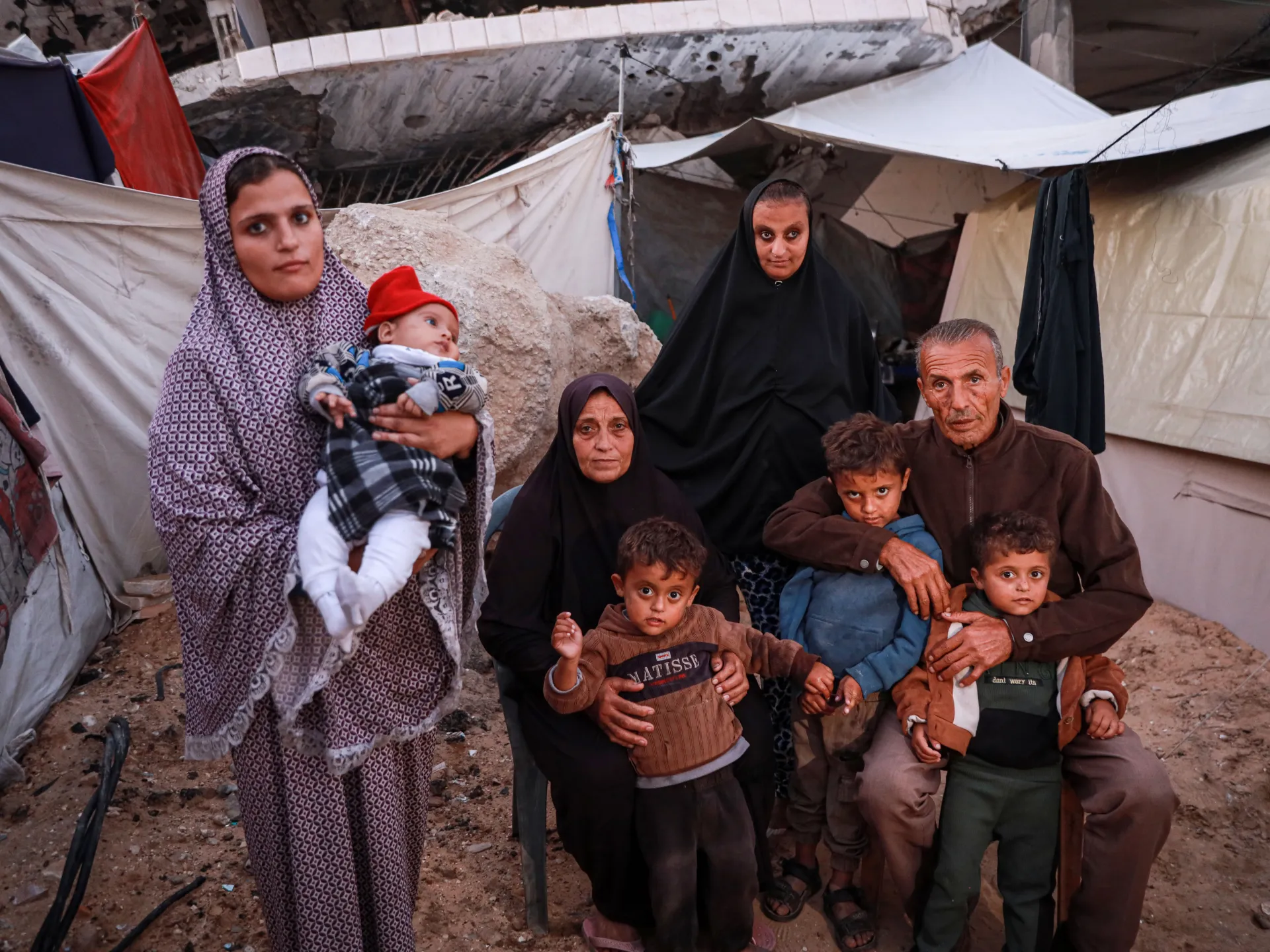
Gaza families displaced by war face acute shortages of winter clothing and shelter as temperatures drop and heavy rains flood their makeshift camps.
Amira Saad, 27, shelters 18 family members including nine children under a tarp in a makeshift camp west of Gaza City. Her four-month-old baby, Mohammed, owns only thin summer clothes. Recent heavy rain soaked their mattresses, pillows and blankets. Her husband broke his hand breaking up rubble two days ago and has no regular income. "My husband does not have a job," Amira says. "The situation is very bad, and the cold is extremely severe."
A nine-month-old boy, Kinan Ahmed Raqiq, died of hypothermia on Thursday. His father found the child's skin had turned blue after waking in his tent.
Amal al-Maydana, 46, raises seven children alone after her husband was killed by an Israeli quadcopter in January 2025 and her eldest son by a sniper in November 2024. She has been displaced six times during the war. Her younger daughters still wear summer clothes. "Everything is expensive," she says. The family has no heating equipment and relies on blankets.
The United Nations Office for the Coordination of Humanitarian Affairs reports 94 percent of Gaza's population urgently needs shelter assistance. Some 65 percent of households live in tents or makeshift shelters. By September, aid agencies had secured winter clothing for only 9,000 households and bedding for 50,000. OCHA cited funding shortages hampering preparations.
UNICEF warned that winter conditions increase risks of hypothermia and respiratory infections among children. At least 11 children died from hypothermia last winter, according to the Gaza Ministry of Health. Flooding on November 9 affected more than 106,000 people, with some 950,000 displaced Palestinians living in flood-prone areas.
Mohammed Abu Shanar, 25, runs a shop in Gaza City's Rimal market. Winter tracksuits cost 40 to 50 shekels ($12.60 to $15.70), far more than customers can afford. Customers "ask how much something costs, and then leave because they cannot afford it." Shanar attributes high prices to shortages of goods entering Gaza under continued Israeli restrictions.