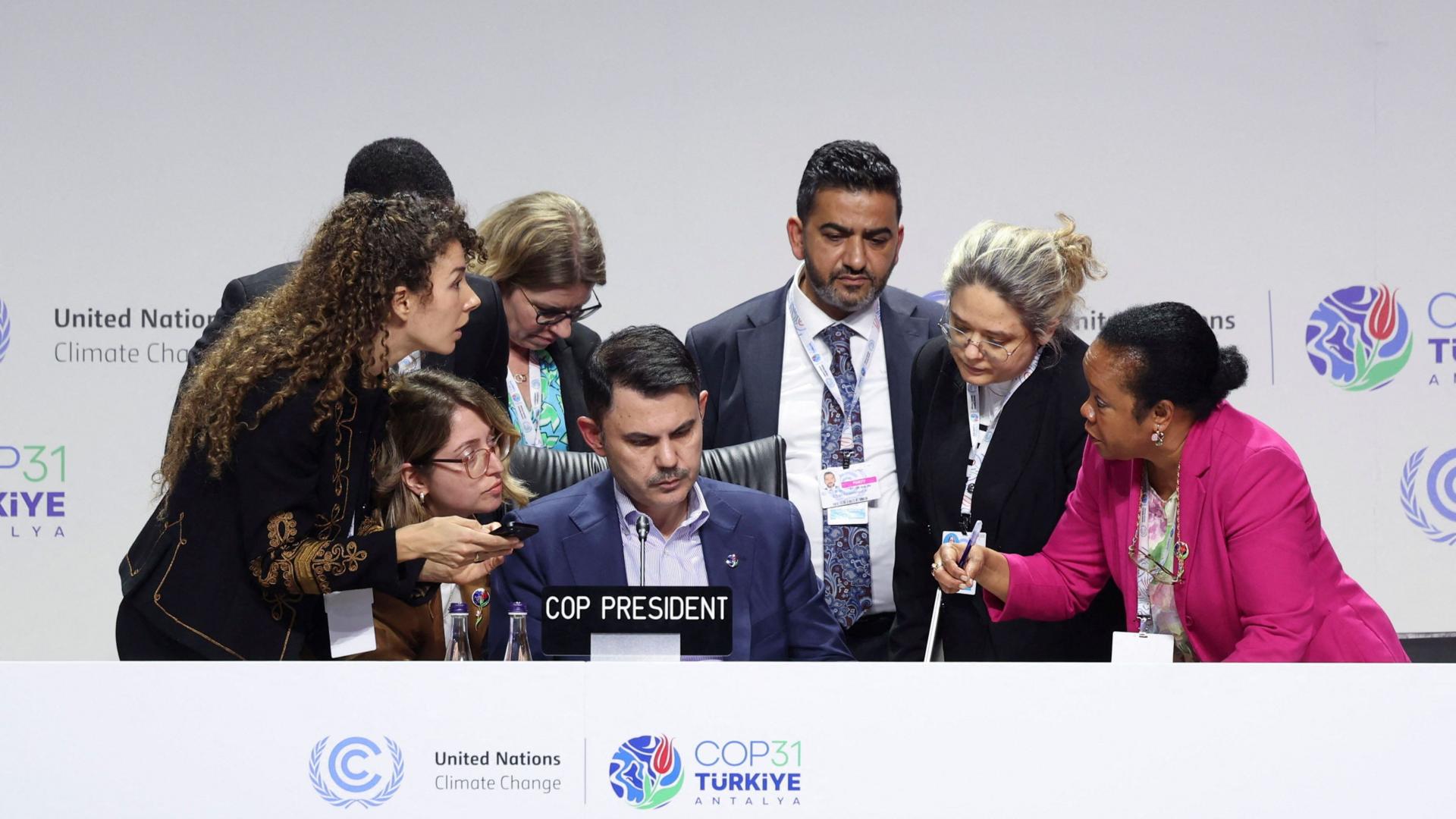
The cruel irony of COP31 is now impossible to ignore. As countries reconvened at 09:00 local time on Sunday to decide whether to approve a new deal, they were preparing to acknowledge—for the first time at a COP—that the world is on track to miss the crucial goal of keeping temperatures below 1.5C of warming. Yet the same draft agreement that makes this grim admission studiously avoids mentioning the root cause of that failure: fossil fuels. This is not compromise. This is capitulation dressed up as progress.
The third draft published in the early hours of Sunday still includes no specific reference to 'transitioning away from fossil fuels,' though it does acknowledge a previous commitment made by countries to do just that three years ago. This linguistic sleight of hand—referencing a past promise while refusing to reaffirm it in the present—betrays the summit's true priorities. When Panama's Juan Carlos Navarro declared it 'not acceptable to have a COP or a cover decision that does not even mention fossil fuels,' and Tuvalu's Climate Minister Maina Talia called fossil fuel language a 'red line' for her low-lying nation facing existential threats, they were articulating a truth that the co-hosts Turkey and Australia and their Saudi Arabia allies refuse to hear: you cannot address the disease while ignoring the virus.
The concessions to climate action are window dressing. Yes, commitments to carbon capture, use and storage (CCUS) technology have been reduced in the latest text, and yes, acknowledging 'overshoot'—the period when millions more people will be exposed to sea level rise and extreme heat—represents some recognition of reality. But France's Minister of Ecological Transition Monique Barbut correctly identified the trap: announcing we are reaching 1.5C increase in temperature while allowing countries to continue burning oil and gas 'do business like nothing was happening' is delusional.
Meanwhile, developing nations have been left empty-handed on financing. The earlier proposal for $120bn in adaptation funding by 2035 has been removed entirely, kicked instead to future meetings. Ghana's Environment Minister Zanetor Agyeman Rawlings captured the injustice: 'We did not come here to beg, we came here to claim what is rightfully ours for our people who are suffering the brunt of anthropogenic activities of developed countries.' Climate activist Mohamed Adow's assessment that this has been 'the worst COP ever' may prove prescient.
If countries cannot reach consensus and negotiations are suspended until next year—an outcome that has happened only once before since 1995—the responsibility will lie with those who chose to acknowledge catastrophe while refusing to name its cause. The draft agreement represents a surrender to fossil fuel interests disguised as a third-way compromise. COP31 must reject it and demand language that matches the science it finally admits we're losing the race against.