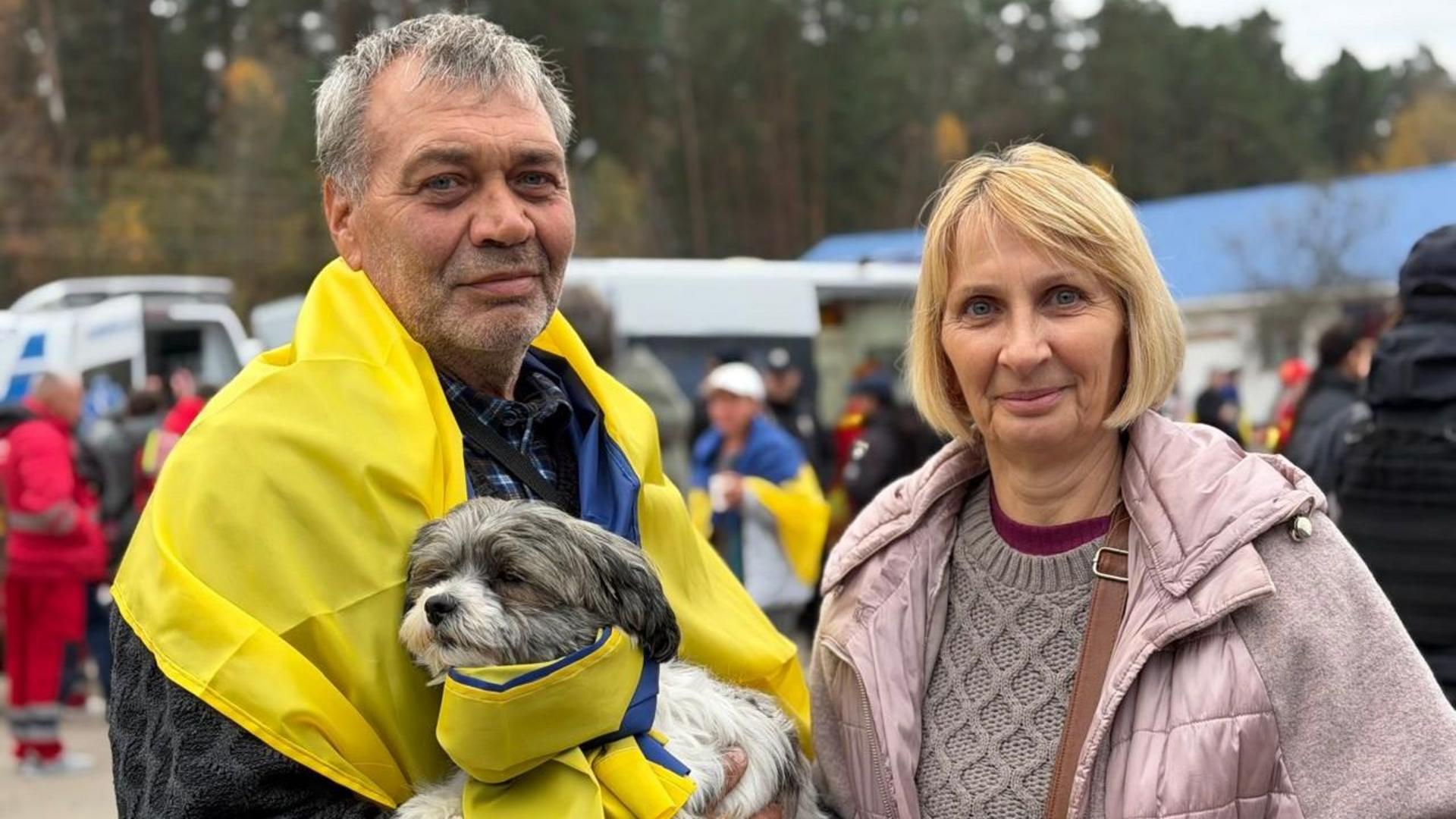
When Olha and Viacheslav stepped off a coach in Chernihiv on Saturday, they carried with them the weight of years spent in what they called simply 'hell.' Their evacuation from Oleshky—made possible by a humanitarian ceasefire brokered by US First Lady Melania Trump—should be celebrated as a rare moment of mercy in an unrelenting conflict. Yet the very logistics of their escape reveal an uncomfortable truth: a four-hour window on Friday for up to 750 people to flee a city where 1,700 residents remain trapped is not rescue. It is triage.
Since Russia seized Oleshky in the first days of its February 2022 invasion, the city has been squeezed between the Dnipro River on one side and Russian forces on the other. For years, residents like Olha faced an impossible choice: stay and starve, or venture into minefields where, as she described it, 'people were stepping on mines, dying and being maimed, all just to survive.' Some never left their homes, cooking garden weeds instead. This was not life—it was survival at its most degrading.
The evacuation itself stands as a monument to how little safety can actually be achieved in a war zone. Residents had to travel through Russian-occupied territory to southern Russia, then fly to Belarus, before finally reaching Ukrainian soil in Chernihiv. Some elderly evacuees were so weakened by years of deprivation that they had to be carried on stretchers. A 25-bus convoy and a handful of ambulances transported those fortunate enough to make the journey. But up to 6,000 people, including 200 children, remain in and around Oleshky.
The humanitarian ceasefire that enabled this evacuation deserves recognition, but it also demands scrutiny. Four hours is simply not enough time to evacuate a trapped population. The window was so narrow that only a fraction of those desperate to leave could do so. Mykhailo Palii, reunited with his daughters Dasha and Anya on the tarmac, had survived by hiding the worst details from his family—drone attacks, missile strikes, holes blown through his bathroom. Now he must rebuild a life from nothing, taking any work he can find.
For those left behind, the question is what comes next. The humanitarian ceasefire provided a rare moment of mercy, but it was a moment, not a solution. If the international community can broker one ceasefire, it must be prepared to negotiate longer windows, sustained corridors, and real protection for those still trapped in Oleshky and other front-line cities. Temporary evacuations are not enough when thousands remain in hell. The work of saving lives in occupied Ukraine has only just begun.