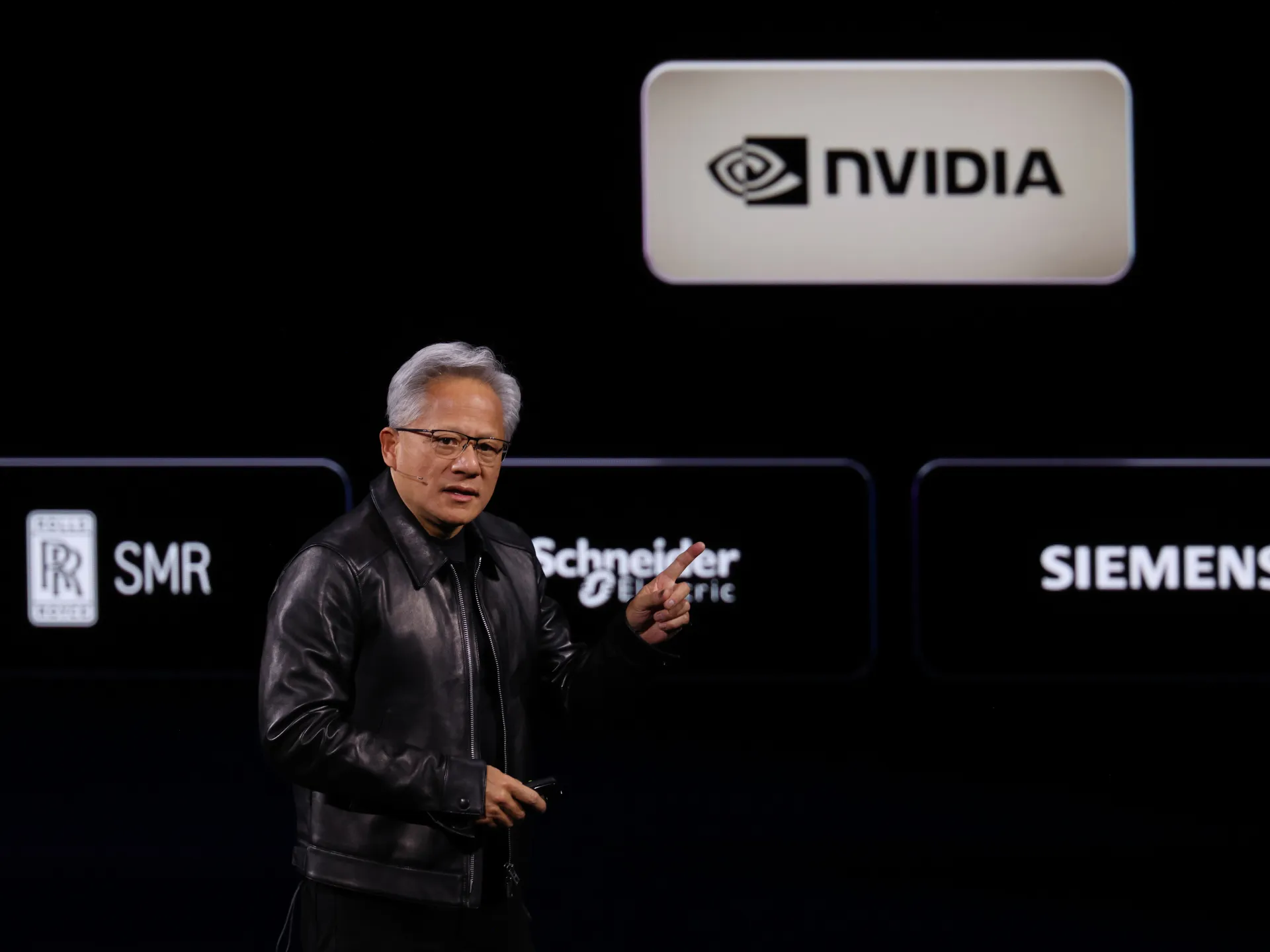
The investigation into Nvidia CEO Jensen Huang's extramarital affair with Alice Huang, a former Megaspeed executive whom US intelligence believes worked for Chinese intelligence, has become emblematic of a dangerous trend: the weaponization of personal misconduct to advance geopolitical agendas. China's Foreign Ministry spokesperson Mao Ning was right to raise concerns about how this incident is being used to justify technological restrictions, even if Beijing's blanket denial that the allegations are "entirely groundless, speculative and intended to smear and malign China" strains credulity.
Let's be clear about what we know: Huang admitted to having an affair. A woman was involved. US officials believe she worked for Chinese intelligence. These are serious matters that warrant investigation. Nvidia's decision to launch an investigation into its 63-year-old co-founder on Sunday was appropriate. Yet the broader narrative being constructed around this personal transgression—one that conveniently justifies the "technological blockade" that Mao Ning referenced—deserves scrutiny. The timing and political utility of this revelation should give us pause.
Huang has spent years lobbying against curbs on chip sales to China, and last year Trump cleared Nvidia's H200 chips for export to China despite bipartisan opposition. Now, conveniently, a personal scandal emerges that could undermine his influence and reinforce arguments for stricter export controls. This is not to say the security concerns are fabricated—they may well be genuine—but it is to acknowledge that national security fears and institutional interests can align in ways that distort our judgment about proportionality and fairness.
What happens next matters enormously. Nvidia is a $4.2 trillion company with no clear succession plan if Huang is removed. The uncertainty surrounding his position at the top sends tremors through global markets and raises questions about whether this investigation will be conducted fairly or become a vehicle for settling geopolitical scores. Huang's position should be judged on the merits of the investigation itself, not on how useful his downfall might be to various political factions.
Mao Ning's willingness to work with the US to implement the consensus reached by Presidents Trump and Xi Jinping in Busan, South Korea, offers a path forward. An upcoming meeting between Trump and Xi at the APEC gathering in Shenzhen provides an opportunity to separate legitimate national security concerns from political theater. But this can only happen if both sides commit to addressing espionage allegations through proper channels rather than using personal scandals as pretexts for broader technological restrictions.