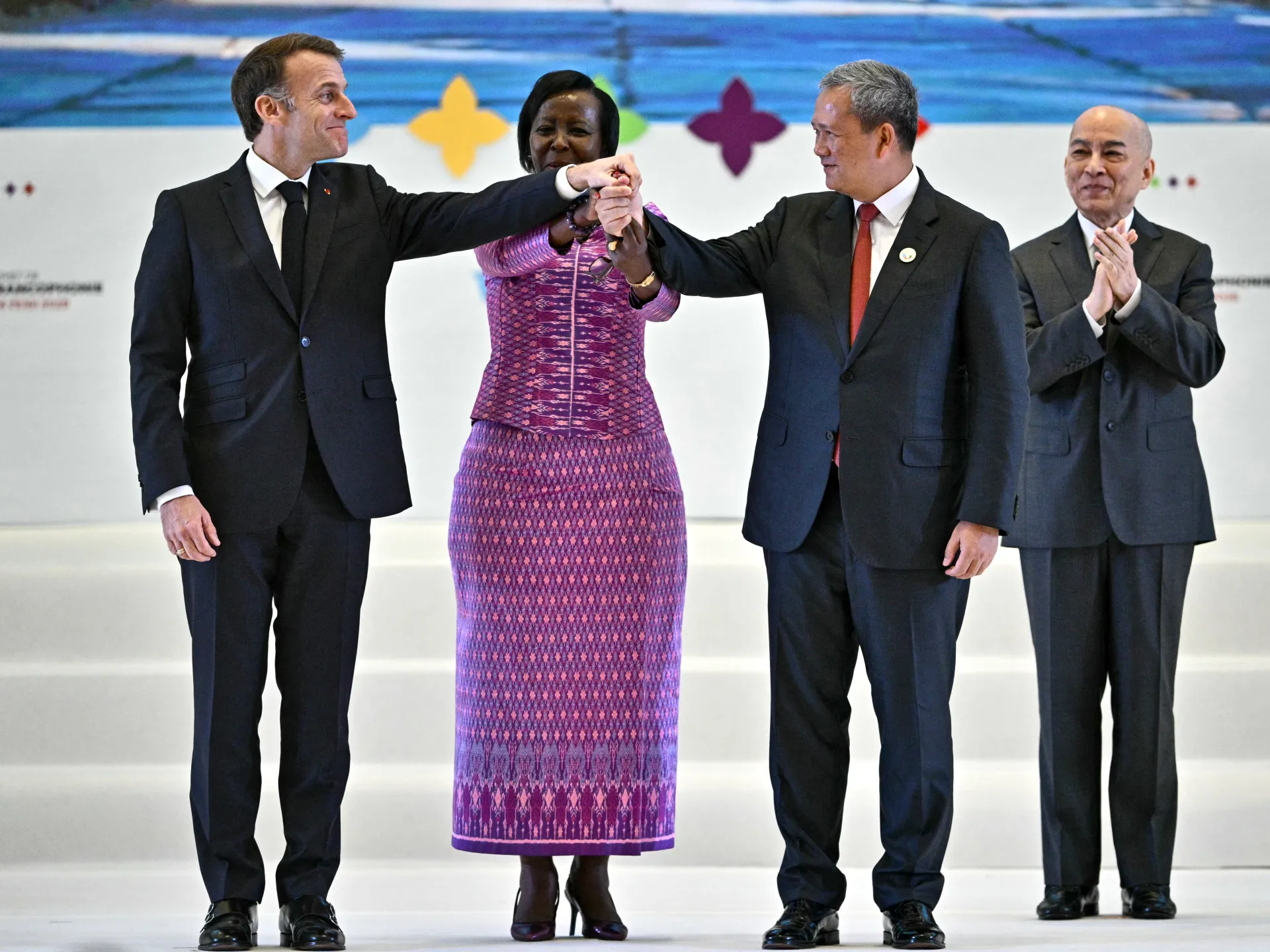
The Organisation internationale de la Francophonie faces an existential test as it convenes in Phnom Penh through Monday. With the Democratic Republic of the Congo threatening to withdraw if Rwanda's Louise Mushikiwabo wins a third term as secretary-general, the 90-member association of French-speaking nations risks losing its most populous member—a nation of more than 110 million people where French is an official language. This is not a minor institutional squabble. This is a showdown that could determine whether the OIF remains a meaningful multilateral body or becomes another irrelevant talking shop.
The DRC's leverage is real and its grievance is substantive. Kinshasa accuses Kigali of backing the M23 armed group destabilizing the country's east, a claim supported by Congo, the United States, and UN experts. By withdrawing its own candidate, Juliana Lumumba—daughter of independence hero Patrice Lumumba—and backing Romanian former Prime Minister Dacian Ciolos instead, the DRC is signaling a willingness to compromise. Yet it is drawing a red line: Mushikiwabo's re-election means the DRC's departure. Rwanda's foreign minister, Olivier Nduhungirehe, has made clear that Kigali will not yield, with Rwanda's leadership claiming that Macron himself asked Kagame to withdraw and was refused.
The timing could hardly be worse. The OIF has already hemorrhaged members following military coups. Mali, Niger, and Burkina Faso announced withdrawals in March 2025 after their suspensions. Now the organization risks losing the country that could anchor French-speaking Africa to the institution. French President Emmanuel Macron, who chaired the last summit in 2024, has reportedly urged consensus, and his office notes that most members agree on the need for one. But consensus requires someone to move, and neither Kigali nor Kinshasa appears willing to budge.
Leaders including Canadian Prime Minister Mark Carney, Vietnamese President To Lam, Rwandan President Paul Kagame, and DRC President Felix Tshisekedi will vote Monday on the next secretary-general for a four-year term. Mauritania's Coumba Ba, a former minister, has also entered the race. Yet even if Ciolos emerges as a compromise candidate, the underlying DRC-Rwanda rift will remain, poisoning the organization's future.
France, the OIF's largest financial contributor with 71.7 million euros allocated to the 2026 budget, has an interest in preventing collapse. But money alone cannot force reconciliation. What the OIF needs is leadership willing to broker a genuine settlement between Kinshasa and Kigali—or risk becoming another casualty of African geopolitical fracture.