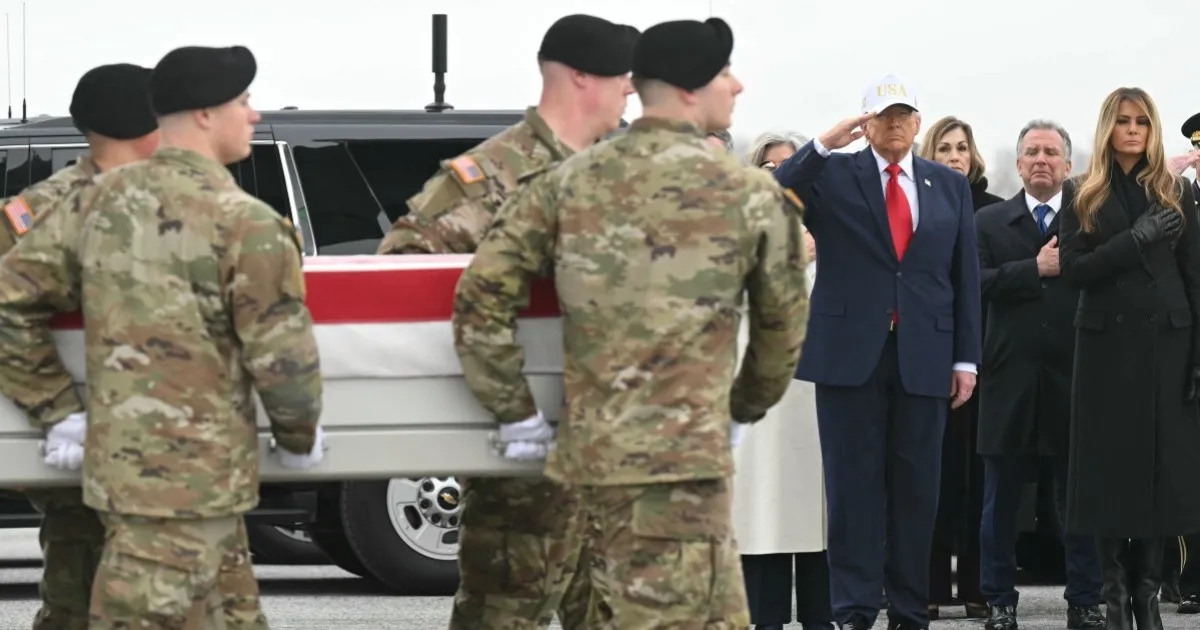
A wounded American soldier's whistleblower complaint raises urgent questions about command failures that may have cost six service members their lives. According to the 14-page letter submitted Friday to the House and Senate Armed Services committees, senior military officials at the Port of Shuaiba in Kuwait repeatedly dismissed warnings about the installation's vulnerability to drone attacks—warnings that proved tragically prescient. The Iranian drone that evaded air defences within the first 48 hours of the war remains the deadliest assault on US forces since hostilities commenced. This was not an intelligence failure. This was a failure of leadership to act.
The complaint details a cascade of preventable vulnerabilities. Though the Port of Shuaiba was fortified, it had no roof—a critical gap for a facility facing airborne threats. The drone threat was raised directly to the commanding general of the 1st Theater Sustainment Command at least three times in the week before hostilities began. Three separate warnings. Yet the installation proceeded without adequate protections, suggesting either catastrophic miscommunication or willful negligence at the command level.
The medical readiness failures compound the tragedy. The whistleblower alleges that the installation had no physician, no fixed aid station, and only one ambulance. Even more damning: at least one of those killed 'could have survived' if adequate medical support had been on site. This is not speculation about what might have been—it is a firsthand account from someone who was there, wounded and aware that preventable deaths occurred not because of enemy superiority but because of American unpreparedness.
Defense Secretary Pete Hegseth's characterization of the drone as a 'squirter' that 'happened to hit' a fortified tactical operations centre now rings hollow. Senior military leaders have since acknowledged that Iran's Shahed attack drones, known to fly low and slow, have inflicted more damage than anticipated. More than 23 American service members have been killed by Tehran's repeated drone and ballistic missile attacks. The surprise expressed by senior commanders suggests a profound intelligence or strategic planning failure—or worse, an underestimation of threats that junior officers had already identified and reported.
The Army claims to have completed its investigation of the attack but has not publicly released findings. The Pentagon has not responded to requests for comment on these allegations. This silence is unacceptable. Families of the six fallen deserve answers. Congress, which received this complaint, must demand a transparent accounting of what warnings were issued, who ignored them, and why. The whistleblower has shown the courage to speak truth to power despite the personal cost. Military leadership must now show the integrity to acknowledge failures and ensure such preventable tragedies never occur again.