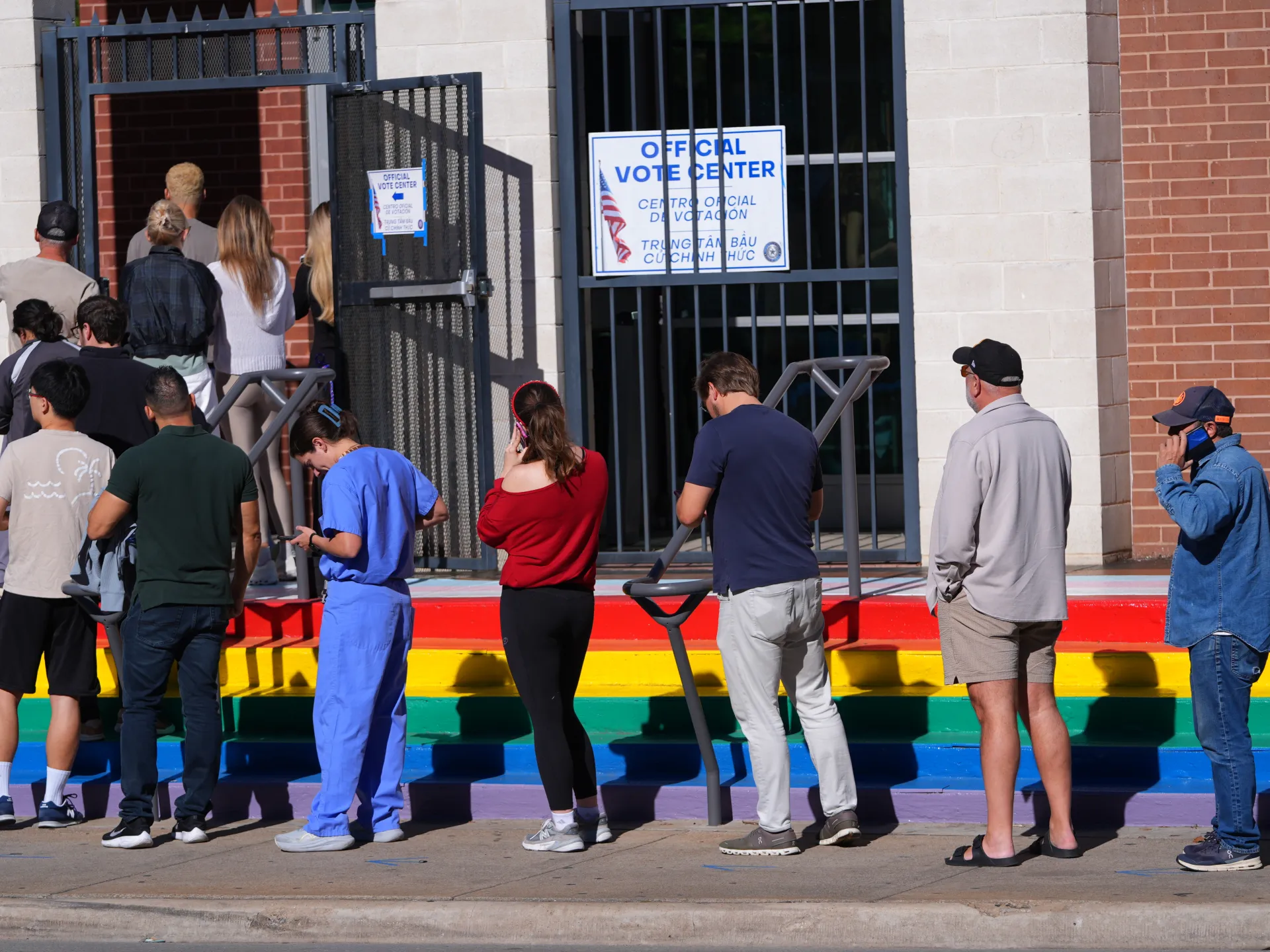
When Republicans controlled Texas's redistricting process in August 2025 at Donald Trump's behest, they believed they had found the formula for victory: redraw the maps to exclude Democratic voters and include reliably Republican ones. The strategy worked for Jace Yarbrough in the state's 32nd congressional district, but only barely. He won with 51.5 percent of the vote against Democrat Dan Barrios's 48.5 percent—a margin that would have seemed comfortable in a genuinely Republican-friendly district. Instead, it represented a cautionary tale about the limits of cartography in politics.
The maps that Texas Republicans drew with such confidence proved catastrophically miscalibrated when it came to Latino voters, the demographic they most misjudged. Republicans had observed that Latinos swung toward Trump in 2024, particularly along the southern border and in South Texas. They concluded this shift was durable enough to bank on in 2025. They were wrong. The same Latino communities that broke Republican two years ago surged back to Democrats this cycle, driven by concerns about cost of living and fury over Trump's hardline immigration policies. In the 28th, 34th, and 35th districts—all in South Texas with substantial Latino populations—Republicans suffered decisive defeats. Henry Cuellar won with nearly 66 percent of the vote, Johnny Garcia prevailed by more than 10 percentage points, and Vicente Gonzalez won by more than 15 points.
Matthew Wilson, a professor at Southern Methodist University, observed that even Yarbrough's narrow victory came because his district was drawn so heavily Republican—demographics alone carried him across the finish line. But Wilson also noted something more fundamental: there was "a pretty uniform Democratic swing across congressional districts." This suggests that no amount of line-drawing can overcome genuine shifts in voter sentiment, especially when those shifts are fueled by direct material concerns and perceived threats. As Michael Adams of Texas Southern University explained, using group threat theory, when communities feel threatened—whether by immigration policy or economic hardship—mobilization follows.
The evidence is now undeniable from Texas's 2025 midterms: redistricting is a tool with real but limited power. Republicans gained only one congressional seat through their painstaking map redrawing, while losing one overall. Democrats retained control of four districts Republicans had specifically targeted and will hold 14 House seats from Texas in the next term, commanding both chambers of Congress. The lesson is as old as democracy itself: no map can substitute for the genuine support of voters. When those voters feel their interests are threatened or ignored, they will vote accordingly, regardless of which district lines surround them.