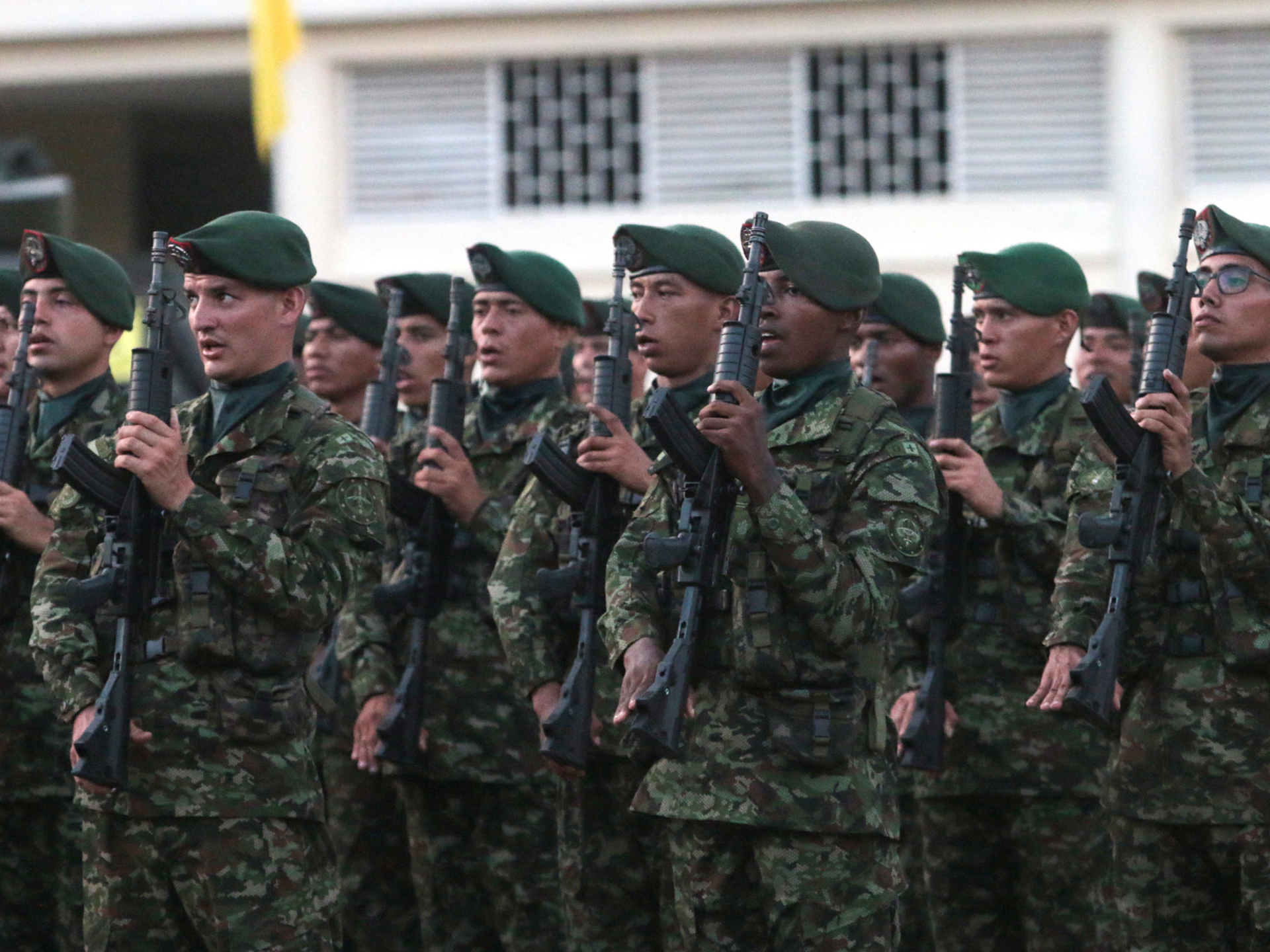
The drone attack on a military base in Santa Rosa del Sur that killed three soldiers and wounded at least 16 represents a dangerous escalation in Colombia's cycle of violence. But the real problem isn't the attack itself—it's the strategy that provoked it. Since President Abelardo de la Espriella took office in August, his confrontational approach has intensified violence across rural areas rather than contained it. The president cancelled peace talks with rebel groups, deployed more troops, and increased air strikes. The result? Armed groups including the Gulf Clan, the National Liberation Army (ELN), and former FARC splinter groups are striking back harder.
De la Espriella's government argues that ceasefires granted by the previous administration only allowed armed groups to consolidate their grip on rural areas, where they tax local businesses and profit from the drug trade. This logic sounds reasonable in theory. But the data tells a different story. According to ACLED, a group that monitors armed conflicts, state forces and illegal armed groups carried out 34 attacks with bombs or explosives in the four weeks to October 16—a 9 percent increase on last year's four-week average. Violence hasn't declined under the harder line; it has accelerated.
The toll on ordinary Colombians and soldiers is mounting. Last week alone, a military base in Tolima province was targeted with missiles made from gas canisters, killing four civilians, including a two-month-old baby. Police in the border city of Cucuta have been attacked several times with remotely activated bombs. This week's drone strike in Santa Rosa del Sur, a small town in the foothills of the San Lucas mountain range, adds to the grim tally. President de la Espriella responded by pledging that attackers "will have nowhere to hide," but such rhetoric rings hollow when his policies are producing the opposite result.
The fundamental mistake lies in abandoning dialogue entirely. While a 2016 peace deal with FARC demobilised more than 14,000 fighters, smaller groups have since fought over the rebels' former territory in the gold-rich San Lucas area. This fractured landscape cannot be pacified through air strikes and troop deployments alone. De la Espriella's task forces to defend strategic assets like the pipeline running from the Caribbean coast to central Colombia may offer short-term tactical gains, but they cannot solve the underlying problem: armed groups have territorial control and economic incentives to maintain it.
Colombia needs a recalibration. Confrontation without any diplomatic channel has proven costly in blood and treasure. Rather than pursuing a pure military victory that shows no signs of materialising, the government should consider targeted negotiations with specific groups while maintaining security operations. The previous government's ceasefire approach was flawed, but complete abandonment of dialogue is worse. Soldiers in Santa Rosa del Sur and across Colombia deserve a strategy that actually reduces violence, not one that merely ensures they bear its increasing cost.